

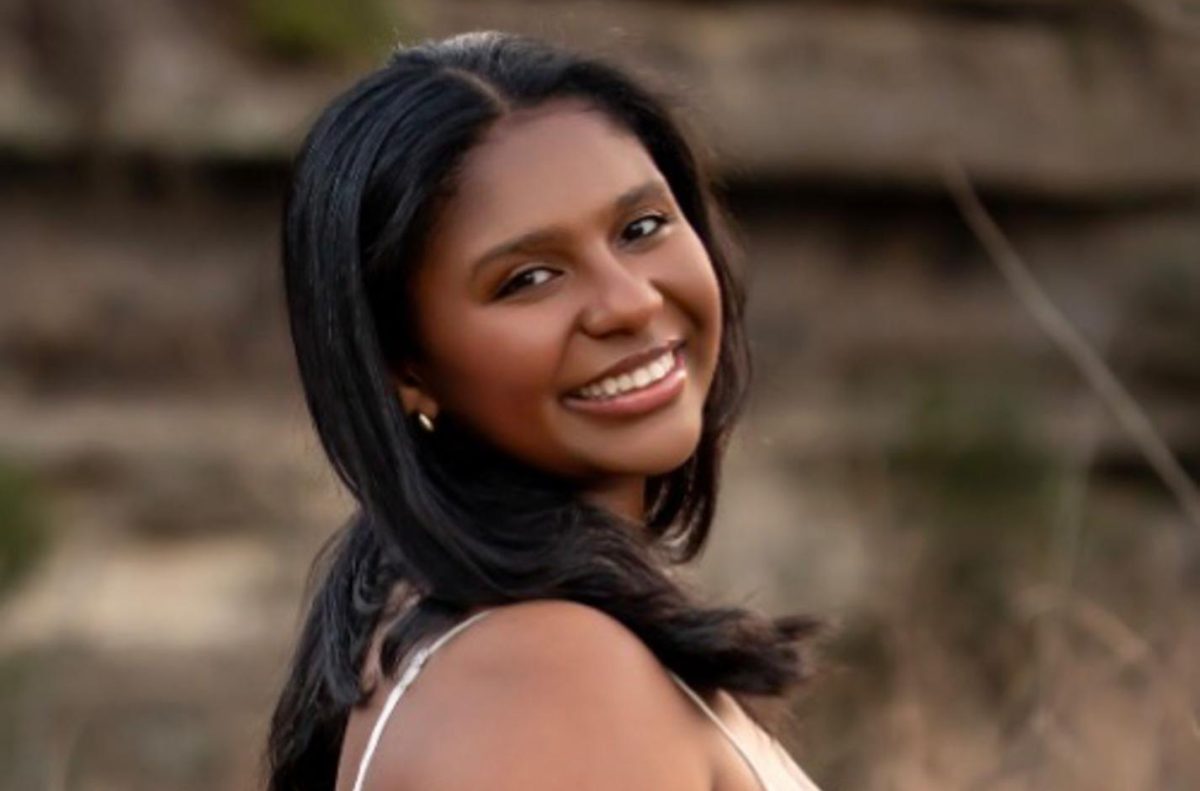
Before the acceptance, there was radio silence.
For senior Saron Amsalu, checking her college decisions never felt routine. Each click carried a mix of hope, fear and uncertainty, especially during the long stretch from January through March when she heard almost nothing back.
“It was possibly the scariest time of my life,” Amsalu said. “I wasn’t receiving likely letters or any indication that I was going to get into the reach schools on my list.”
That silence made what came next feel almost unreal.
By the end of the process, Amsalu had been accepted to 18 universities, one waitlist from Harvard and zero rejections. This acceptance run included 4 Ivy League schools (Dartmouth, Yale, Brown and the University of Pennsylvania) and Stanford, her dream school for years. Altogether, she earned $524,000 in merit scholarships. Additionally, in her acceptance at Brown University, she received acceptance to the highly competitive PLME (BS/MD) program.
“I feel like I’m living someone’s dream,” she said. “No one expects to get into their top school, let alone multiple top schools.”
According to Amsalu, this reflected how unpredictable and opaque the admissions process really is, where there is no guaranteed formula or single version of a “perfect” applicant. Amsalu began preparing months before senior year, researching colleges in the spring and writing essays throughout the summer. What she expected to be a structured process quickly became something far more intense.
“I was writing [my personal statement] until mid-October,” Amsalu said.
Even after submitting those applications, she kept going. In December, just weeks before deadlines, she made the decision to apply to several additional top schools.
“I literally started my applications for Yale, Brown, Dartmouth, UPenn and Northwestern just a few weeks before the deadlines,” Amsalu said. “I would not recommend doing that.”
What grounded her through all of it was a decision to stay honest in how she presented herself. Instead of trying to fit a mold, she focused on telling her own story in a way that felt real.
“Authenticity beats any facade you make of yourself,” Amsalu said.
According to her, that belief became especially important as she navigated the overwhelming amount of advice surrounding college admissions, much of it coming from social media. In reference to college advising platforms, Amsalu feels strongly about not following the guidance of Elise Pham, a content creator, (@Ultimateivyleagueguide) due to the reasoning that she instills fear within applicants.
“Be super careful about which influencer college advisors and advice you’re consuming because more often than not, they provide out-of-context, conformist and inaccurate information about the college admissions process, which, at the end of the day, is super nuanced and unpredictable,” Amsalu said.
Instead, Amsalu pointed to a Harvard Crimson opinion piece that critiques the rise of influencer-driven college advising, describing how much of the content students consume is often misleading or taken out of context. Amsalu explained that many of these influencers present the process as something rigid and formulaic, creating the impression that one wrong decision or one imperfect essay could ruin an entire application.
According to Amsalu, the process is far more nuanced.
“Valedictorians, 1600 SAT scorers and people with incredible achievements get rejected all the time,” Amsalu said.
That kind of messaging, she explained, can quietly shape how students see themselves. It can push them to second-guess meaningful experiences or avoid writing about things that genuinely matter to them, simply because they have been told it is “too common” or “not impressive enough.” Amsalu experienced that pressure firsthand when deciding what to write about in her own essays.
“A piece of advice I saw a lot was not to write about a service trip,” Amsalu said, “but I wrote about my experience in Ethiopia anyway because it mattered to me, and it worked out.”
For her, that moment became a reminder that the strongest applications are not built on trying to impress, but on being honest. However, throughout high school, Amsalu found herself constantly navigating pressure, competition, and self-doubt as she challenged herself with rigorous courses and leadership roles.
“I ran for class president, and I did not win,” Amsalu said.
Moments like that forced her to confront something deeper than academics.
“The hardest part was maintaining a strong sense of self-worth when things got tough,” Amsalu said.
There were times when that confidence felt fragile to her. A lower-than-expected grade in AP Calculus shook her more than she anticipated.
“I thought I was a failure when I had a B average one six-weeks,” Amsalu said. “It was hard at the time, but it taught me how to study and how to push through.”
As a musician, not advancing in competitions made her question her abilities. However, over time, those moments became part of a larger understanding that growth is rarely linear.
Outside of academics, band became one of the most meaningful parts of her high school experience. It gave her a sense of belonging that balanced everything else.
“We created unforgettable memories,” Amsalu said. “We could just be ourselves.”
That community, according to her, reminded her that success is not only about outcomes, but also about the people and experiences that shape the journey.
Now, as she looks ahead, Amsalu is quick to emphasize that college decisions, no matter how significant they feel, do not define a person’s worth.
“Whether you were accepted, waitlisted, or rejected, it is not a reflection of your capability as a human being,” Amsalu said.
Her journey reflects that belief, being shaped by persistence, honesty and a willingness to trust herself even when the outcome was uncertain.
“I think my younger self would be really proud,” Amsalu said, “because she could finally believe that hard work pays off.”

Viveka teshome • Apr 28, 2026 at 10:49 am
Wow well written. Beautiful experience and has many messages. Best wishes Saron ye!!!