


Noisy conversation and various games engulf the gym as students congregate after first period. While participants gather, leaders prepare for their lesson or wait for their guest speaker to arrive. Students excitedly anticipate the message they’re about to receive, one that’s likely going to inspire them and help get them through the day. Surrounding themselves with like-minded people of faith provides invaluable community and rejuvenates hardworking students.
“It’s super important [to have community in faith] because the world is hard, and having people who are similar in your faith can help you out when you’re going through hardships,” sophomore John Janisch said. “It’s very helpful, and it’s helped me get through some rough times.”
The school hosts a variety of Christian clubs, including the Vandegrift Collective, founded by the Lombard brothers and described in detail in a previous story. However, FCA makes up another popular Christian club at the school.
The Fellowship of Christian Athletes (FCA) is a student-led organization within high schools. Chartered in 1954 by Don McClanen, it originally sought to utilize sportsmens’ influence to spread Christian faith. Implemented in high schools in 1966, it’s since spread throughout Texas. Its purpose in schools encompasses connecting coaches and athletes through the Gospel and focusing on God’s word.
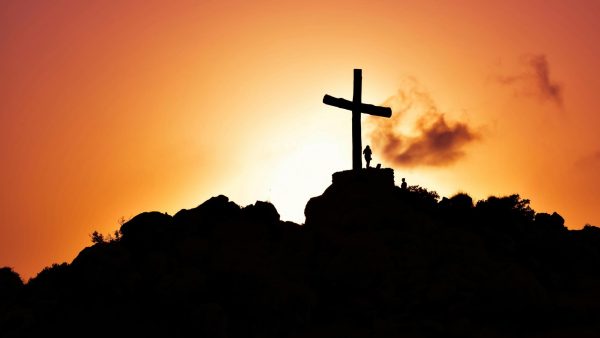 “A lot of the time as a Christian, you feel very alone,” sophomore Grace Draeken said. “The Lord, he makes us feel separate from other people. So having a community of other Christians that are kind of focused on the same things as you can be really helpful in your walk and relationship with the Lord.”
When Draeken talks about separation, she refers to the Christian theology that the more like Jesus a follower becomes, the more they are rejected by the world, just as he was. FCA meets during PIT, usually on the first Monday of each month. For spectators, their typical schedule begins with unstructured recreation — various groups of people playing different sports or games — until the speaker the leaders arranged decides to start.
“Our mission is to bring every student and coach closer to the Lord,” sophomore Monroe Craddock said. “You don’t really have to be in athletics. I have a bunch of friends that are in band or choir, and they come. So it’s just to lead everybody closer to the Lord and introduce it to people so they can experience it where they wouldn’t elsewhere.”
Hosted by coach Jim Fletcher, selected leaders ranging from freshmen to seniors structure the club. The student leaders meet every Wednesday to organize their next meeting. They’re tasked with planning a speaker, with options varying from themselves, other coaches, to outside speakers, such as pastors.
“For me, [God is] just the way, the truth and the light,” Draeken said. “He’s the answer to everything. He’s the Father, he created me, and he has a plan for us, so he’s just someone I can put all my trust in. I trust that he can take me to the right place and guide me to peace, prosperity, and all of his other amazing promises.”
A key differentiator between Christianity and Judaism is the belief in Jesus Christ as the Messiah (the savior of the world). Christians regard Christ as the Son of God and sinless atoner for humanity, while Jews don’t believe that he’s the prophesied savior.
“I believe specifically in Jesus Christ, because he has constantly shown up in my life and been prevalent,” junior Shaw Poinsett said. “When I have gone through hard things in my life, I’ve learned not to focus on what’s wrong with my life, but just focus on what maybe he’s trying to teach me. [This mindset has] helped my life tremendously, and I think that following him gives me a real purpose in life.”

The Bible has two main components: the Old Testament and the New Testament. The Old Testament provides a law and foundation that both Jews and Christians accept, while the New Testament depicts Jesus’ teachings and impact, and is read only by Christians.
“Well, I mean everybody has heard the verse before, but John 3:16: ‘For God so loved the world that he gave his one and only son that whoever believes in him shall not perish and have eternal life,’” Poinsett said. “That’s not saying eternal life is everything, because the misconception that we only follow just because we want eternal life gets twisted. The thing I tell people is you have a Jesus-sized hole in your heart, and things of the world are not going to be able to fill that.”
Jesus’ teachings center on the Fruits of the Spirit — love, joy, peace, patience, kindness, goodness, faithfulness, gentleness, and self-control. According to Poinsett, he tries to align himself with these virtues more than anything else to exemplify Jesus as much as he can.
“I believe in God because I think there are so many things that are unexplainable without the Lord,” Craddock said. “I just don’t think that I would be the person I am [without him]. He’s the only thing that can explain the way I am to anybody, because I just have such joy in my heart, even when bad things happen to me. High school is just so hard, so I believe in the Lord because there’s no other way.”